Products
LATEST NEWS
- 01Application of ceramic plunger pump
- 02The structure and principle of ceramic pumps
- 03Alumina ceramic properties
- 04Ceramic metering pump manufacturer
- 05Chinese ceramic pump manufacturer
- 06Troubleshooting pneumatic valve actuators
- 07Analysis of Speed Control Valve Faults in Hydraulic Station Hydraulic Systems
- 08What are the requirements and methods for pressure testing of imported valves?
- 09How to correctly choose a suitable imported valve
- 010Precautions for the Installation and Maintenance of Safety Valves

Address:1st Floor, Zixiang Road, Pingshan District, Shenzhen, Guangdong Province
Zip Code: 518100
Phone: +86 13410681808
E-mail:juchang@ceramic-pumps.com
Medical ceramic pump
HOMEMedical ceramic pump
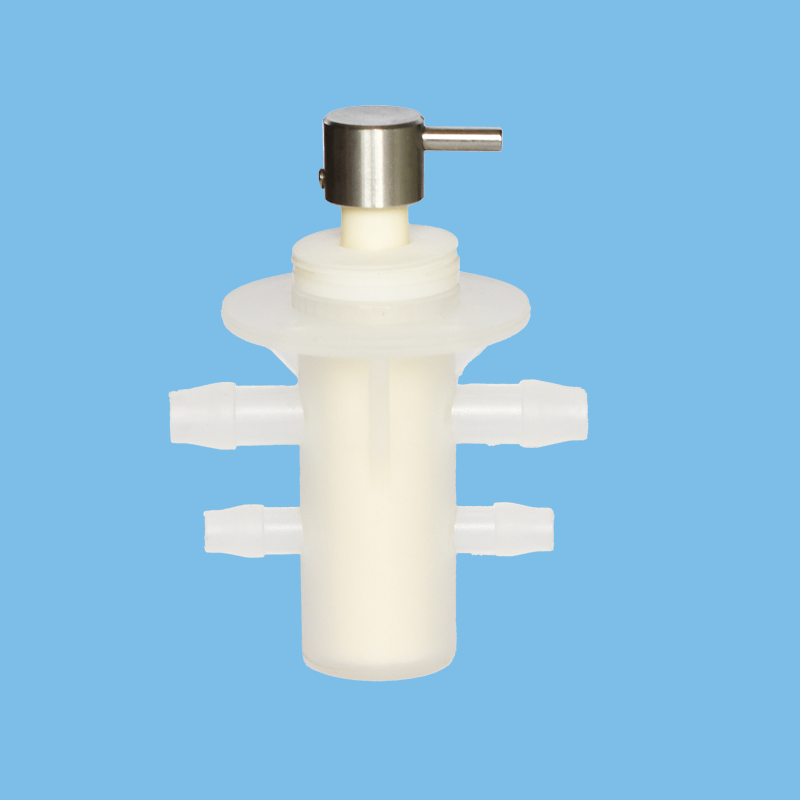
Dialysis machine filter pump
The core working principle of the hemodialysis filter pump is to selectively filter and exchange substances through the semimeable membrane and pressure-driven exchange to remove toxins and excess water from the blood while retaining useful components. Let me break down its working process and key mechanisms for you:
1. Core principle: Selective filtration by the semipermeable membrane
The core component of the filter pump is the semipermeable membrane, which allows only small molecule products (such as creatinine, urea) to pass through while retaining large molecule nutrients (such as proteins). This mimics the filtering function of the glomer in the human kidney, hence the hemodialysis machine is also known as an "artificial kidney."
2. Working process: Exchange of blood and dialys
Blood withdrawal: Blood is withdrawn from the patient's body through a catheter or needle and enters the hemodialysis machine.
Substance exchange: As blood flows through the semipermeable membrane, small molecule waste products diffuse into the dialysate, while electrolytes (such as calcium, bicarbonate) in dialysate diffuse into the blood, helping to maintain acid-base balance.
Water removal: Through ultrafiltration, in a pressure gradient, excess water moves from the blood to the dialysate side, thereby removing excess water from the body.
Blood return: The purified blood is pumped back into the patient's body through a blood.
3. Key mechanisms: Diffusion, convection, and adsorption
Diffusion: Using the solute concentration difference between the two sides of the semipermeable, small molecule toxins (such as urea, potassium) diffuse from the blood to the dialysate.
Convection: Through a pressure gradient, medium- and-molecule toxins (such as β2-microglobulin) move across the membrane with water and are removed from the body.
Adsorption: Certain toxins ( as endotoxins, drugs) are adsorbed on the membrane surface through electrostatic action or hydrophilicity, further purifying the blood.
4. Supporting: Ensuring safety and efficiency
Temperature control system: The dialysate is heated to 35°C~42°C to ensure treatment comfort.
-gas system: Gas is removed from the retentate water through the negative pressure principle to avoid bubbles affecting measurements and the dialysis process.
Dialysate mixing system Precisely control the ratio of A solution, B solution, and retentate water to ensure stable dialysate concentration.
Ultrafiltration control system: Ultrafil volume is regulated through transmembrane pressure (TMP) to precisely control water removal.
5. Summary
The hemodialysis filter pump, through selective filtration by semipermeable membrane and pressure-driven exchange of substances, achieves toxin removal, water regulation, and electrolyte balance. Its core mechanisms include diffusion, convection, and ads, while temperature control, de-gassing, dialysate mixing, and ultrafiltration, etc., auxiliary systems ensure the safety and effectiveness of the treatment